Local LLMs Ask Before Answering: A Prompting Breakthrough
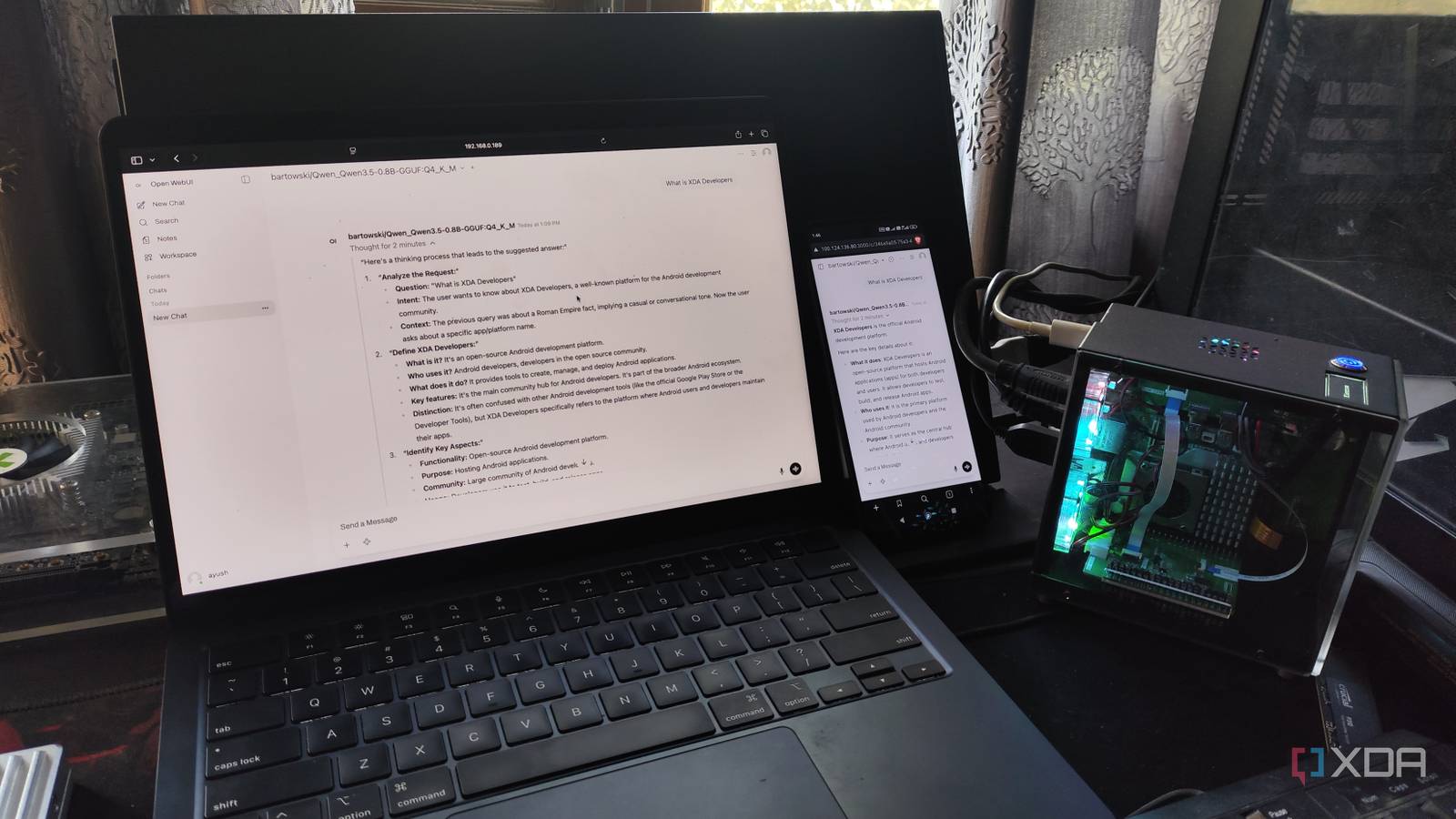
Recent findings highlight a powerful new strategy for interacting with local large language models (LLMs): teaching them to proactively ask clarifying questions before generating a final response. This isn't merely about better prompt engineering; it's about fundamentally shifting the interaction model to mimic human critical thinking, leading to demonstrably more accurate and useful outputs.
Traditionally, users input a query and expect an immediate, complete answer. However, LLMs, particularly those running locally with potential resource constraints or specific domain limitations, often benefit immensely from an iterative, self-correcting process. By explicitly instructing the model to identify ambiguities or missing information in the initial prompt and then request further details from the user, the quality of its subsequent generation rises sharply. This approach transforms a passive query-response cycle into a collaborative problem-solving dialogue.
The implications for Australian businesses are significant, especially for those leveraging or developing custom local AI solutions. Imagine deploying an internal knowledge base LLM that, instead of guessing at poorly worded questions, guides employees to provide the necessary context. This reduces errors, saves time, and enhances the reliability of AI-driven insights, particularly in sensitive or complex operational areas where precision is paramount. For developers, this offers a clear pathway to extracting superior performance from smaller, more domain-specific models.
This methodology is particularly relevant in scenarios where data privacy or proprietary information necessitates local LLM deployment, moving away from reliance on cloud-based, general-purpose models. It democratizes access to sophisticated AI performance, allowing organisations to achieve high-quality results without necessarily needing to engage with the largest, most expensive models. The investment in refining prompting techniques, such as instructing models to 'think step-by-step' or 'ask if unsure', can yield disproportionately positive returns on the utility and accuracy of local AI applications.
Ultimately, the lesson here for Australian founders and tech leaders is that the interface with AI — specifically how we *talk* to it — is as crucial as the underlying model itself. Empowering LLMs to engage in a dialogue, rather than just respond, unlocks a new level of intelligent behaviour and practical efficacy. This paradigm shift in prompting isn't just about efficiency; it's about building more robust, trustworthy, and ultimately more valuable AI tools within the enterprise.
Why it matters
For Australian businesses, this technique means getting superior, more reliable results from local AI deployments, essential for sensitive data or custom applications. It enables better performance from smaller models, potentially reducing infrastructure costs and improving privacy.
The AI news that actually matters — explained simply.
A free daily briefing for Australians. The biggest AI updates without the tech jargon. No spam, unsubscribe anytime.
- Free, always
- No spam, one email a day
- Unsubscribe in one click
- Written for Australians
Discussion(0)
Loading comments…
Related articles

llm-harness: Open-Source Base for Production AI Agents
56m ago

CC-Wiki: Building Shareable Knowledge from Claude Code Sessions
1h ago

Local Dev Tool Simplifies AI Model Mocking & Testing
1h ago

Liteharness: Orchestrating AI Agents Across CLIs
1h ago

New Tool Streamlines LLM Integration for Developers
2h ago

LLM Consensus Tool Boosts AI Answer Reliability
2h ago